

If you just finished your master’s in the U.S., your next big step is finding the right job. I’ve worked with international graduates for years, and I know how exciting and sometimes confusing this stage can be.
In this post, I’ll share real insights on jobs after a master’s in the USA, covering visa rules, salaries, high-demand fields, and practical job search tips. Everything here is based on facts, not hype.
If any data changes, I’ll note to verify on the official site.
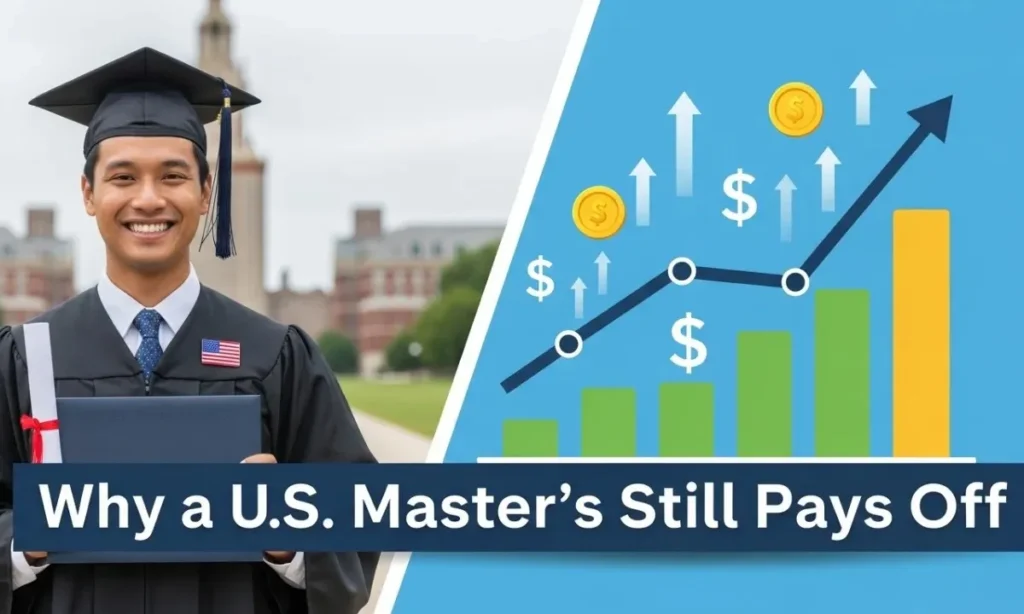
Why a U.S. master’s still pays off
A U.S. master’s degree builds skills that employers value: practical training, research exposure, and English fluency. Hiring managers know that grads from U.S. universities can adapt fast and think independently.
STEM degrees still have the strongest advantage. Tech and analytics roles keep growing, and salaries start high. Data from 2025 shows many master’s graduates earn $75,000–$120,000 in their first full-time year, with top tech and finance roles hitting six figures.
That’s why students actively search for jobs after master’s in USA, because the payoff is often worth the time and cost of studying abroad.
Top industries hiring master’s graduates
The job market in 2025 is technology-driven, but not limited to it. Here’s what the current hiring landscape looks like.
| Sector | Common roles | Median salary (USD) |
| Technology & IT | Software Engineer, Data Scientist, ML Engineer | 120,000–145,000 |
| Healthcare & Biotech | Biomedical Engineer, Health Informatics | 71,000–126,000 |
| Finance & Business | Financial Analyst, Consultant, Investment Banking | 90,000–200,000 |
| Engineering | Mechanical, Civil, Electrical, Aerospace | 80,000–133,000 |
| Consulting & Analytics | Management or Strategy Consultant | 80,000–140,000 |
If your goal is to find well-paying jobs, these five sectors are your best starting point.
Where are the best opportunities right now open

Tech and data science dominate. But healthcare, renewable energy, and finance are also growing fast. Here’s what I tell my students: focus on skills that blend technical ability with problem-solving and communication.
High-growth fields include:
- Artificial Intelligence & Machine Learning
- Cybersecurity & Cloud Computing
- Health Informatics & Biotechnology
- Renewable Energy Engineering
- Fintech & Business Analytics
Graduates from these fields see faster hiring cycles and more reliable jobs after master’s in USA.
How to actually get hired: the steps that work
Finding the right role takes effort and timing. Here’s what consistently helps:
- Start early: Begin applying 3–6 months before graduation.
- Build experience: Internships often lead to full-time offers.
- Use university networks: Career centers and alumni connections matter more than online applications.
- Prepare for interviews: Technical and behavioral prep are equally important.
- Target sponsors: Focus on employers known for hiring international talent.
- Keep records: Track your applications, responses, and deadlines.
Students who treat job search as a project with structure and tracking find jobs after master’s in USA faster than those who apply randomly.
Companies that regularly sponsor international grads
While the list changes each year, these organizations consistently appear in H-1B filings and university career reports:
- Google, Microsoft, Meta, Amazon
- Deloitte, PwC, EY, KPMG
- Tesla, Intel, Qualcomm, Cisco
- Pfizer, Johnson & Johnson, Genentech
- Goldman Sachs, JPMorgan, Wells Fargo
These firms offer a mix of tech, consulting, engineering, and healthcare roles. To find updated records of companies sponsoring international students in USA, check the official Labor Department or MyVisaJobs databases.
Check out our latest blog - Your Complete Guide to USA PhD Admission Process| All About PHD
Understanding work authorization (OPT & H-1B)
After graduation, the first step is Optional Practical Training (OPT). This lets you work up to 12 months in your field. STEM graduates can extend for another 24 months (total 36 months).
This is where many international students land their first OPT jobs for master’s students, often converting those roles into long-term employment.
Once you’ve built some experience, your employer can apply for an H-1B visa sponsorship. Many large companies like Google, Amazon, Deloitte, and Pfizer have structured H-1B programs. Smaller companies sponsor too, but you’ll need to ask early in the hiring process.
Pro tip: Always confirm details on your school’s international student portal or the USCIS site. Visa rules can shift yearly. Verify on the official site.
Post-graduation timeline: your action plan
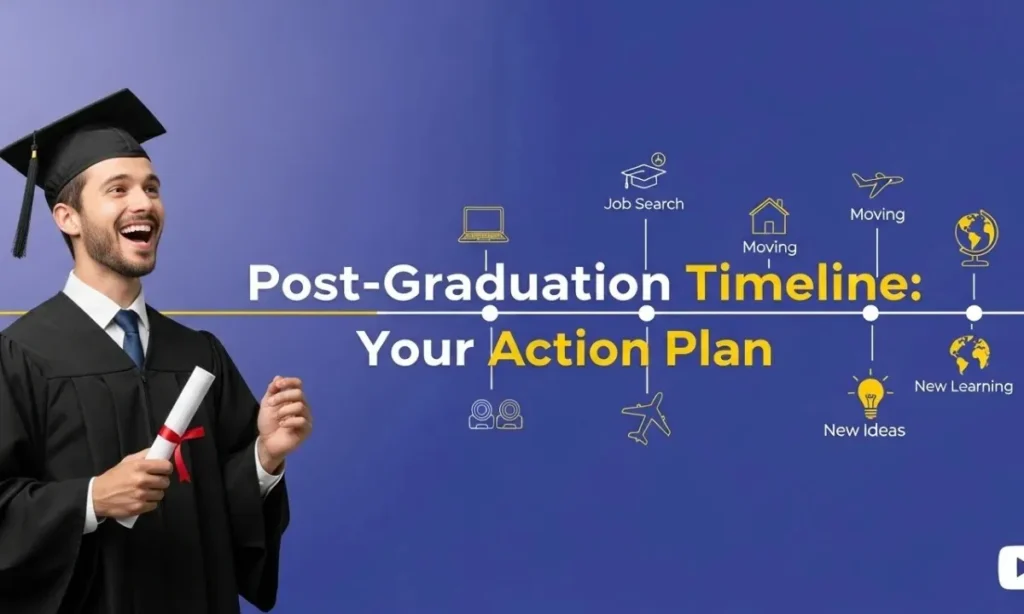
Here’s how your timeline might look after finishing your master’s degree:
| Stage | Timeframe | Action |
| Final semester | Apply for OPT | Get your EAD card ready |
| First 6 months | Start first job | Gain hands-on experience |
| 6–12 months | Apply for H-1B | Ask your employer for sponsorship |
| 12–36 months | STEM OPT (if eligible) | Extend work period and career growth |
These steps keep you legally authorized and professionally active during your early career in the U.S. The structured path improves your chances of securing long-term jobs after master’s in USA.
Final thoughts
Earning a U.S. master’s degree is an investment of money, effort, and time. The return depends on how early and smartly you plan your job search.
Focus on industries where hiring is strong, build practical projects, and keep learning skills that employers need. Whether you’re in tech, health, or finance, there are real, attainable jobs after master’s in USA waiting for skilled, consistent candidates.
If you’re just starting out, make your first 90 days count: apply daily, network weekly, and ask for help when needed. Your next role is closer than you think. You just need the right plan to reach it.