


Dreaming of research leadership in AI, statistics, or big-data-driven discovery? A PhD in Data Science is the credential that trains you to design original methods, lead research projects, and contribute new knowledge. Here at mystudydfuture, we’ll walk you through the admissions pathway step-by-step, help you build a competitive portfolio, and explain what admission committees really look for, all based exclusively on the reference guidance you provided.
Understanding the foundation: key steps

Why this degree matters
A Data Science PhD is a research degree that admissions committees are looking for students who have the quantitative background, as well as motivation, to do independent, original research. Generally speaking, candidates who are admitted to a Data Science PhD program will have a strong quantitative background (computer science, statistics, mathematics, or engineering) and will provide evidence of having engaged in research at some level.
Navigating the US PhD system
Many programs review prospective students based on some combination of academic performance and evidence of research potential. The prerequisites/requirements for a Data Science PhD are usually similar and often include: official transcript, letters of recommendation, a CV, a strong statement of purpose, and, for international students, proof of English language ability. While for many programs the GRE is optional, it may still be required or considered in some cases.
check out our latest blog - Artificial intelligence master’s USA: a practical guide (2025)
Your step-by-step guide to applying for a PhD in Data Science
Step 1: Build a research-ready profile
- Get the math & computing basics solid courses in linear algebra, multivariate calculus, probability, statistics, and programming (e.g., Python/R) are essential.
- Acquire research experience early. Work in a faculty lab, complete an independent project, participate in summer research (REUs or similar), or produce a master’s thesis.Admissions committees know that Data Science students rarely have relevant research experience, but these types of experiences carry significant weight in the PhD admissions process.
- Produce tangible outputs: whether it is a paper, conference poster, open-source code, or software tool, any evidence of having produced something increases your credibility.
Step 2: Prepare application materials
- Academic transcripts: Gather the official transcripts from all colleges you have attended after high school. Most applicants hold a bachelor’s; many competitive applicants have a master’s. There is a GPA cut-off of about 3.0, but most of the top programs will look for GPAs of ≥3.5.
- Letters of recommendation: Secure Letters of Recommendation for PhD from research supervisors or professors who can describe your research skills and potential. Commit to 2–3 strong, specific LORs.
- CV/resume: Emphasize research projects, technical skills, publications, presentations, and awards.
- Statement of purpose: Craft a focused Statement of Purpose for Data Science describing your research trajectory, specific problems you want to study, and the faculty you want to work with. Tailor this to each program.
- GRE/GMAT for Data Science PhD: Check each program — GRE is optional at many schools, but can strengthen an application if your quantitative background needs support.
- Proof of English proficiency: TOEFL/IELTS (unless granted a waiver).
Step 3: Identify advisor fit and reach out
- Investigate faculty whose research aligns with your interests. A strong “goodness of fit” where your past work naturally extends into a professor’s research agenda is a major determinant for admission.
- Reach out to potential advisors with a concise email, your CV, and a brief explanation of fit. This serves two purposes: it helps inform you as to whether potential faculty is taking students, and it helps familiarize your potential advisor with you prior to your application review
Step 4: Timing and logistics
- Start early there are many fall admission deadlines of December or January. You can begin preparation, materials from as early as 1 year out to allow sufficient time for research, writing, and for your LOR preparation.
- If you are applying from outside the country, consider the scheduling of the language test, and getting transcripts
A closer look: comparing common PHD application paths
| Program Path | Typical Entry | Key Application Documents | Ideal Candidate |
| Direct PhD (after BSc or MSc) | Bachelor’s or Master’s in a quantitative field | Transcripts, CV, SOP, LORs, (GRE optional), English test | Strong coursework, early research experience, publications preferred |
| PhD after professional experience | Applicants with industry research roles | Same documents + evidence of research impact at work | Demonstrated project leadership and research outputs |
| Integrated MS → PhD | Programs that admit MS and then transition to PhD | Transcripts, SOP emphasizing research goals | Candidates who need structured research training before full PhD work |
Insider tips for a successful application

Strengthen the research narrative
Students will commonly have more than just raw years in a lab, admissions committees are interested in what you’ve actually learned, how you’ve taken ideas and formulated actual research problems, and how you translate effort into outputs such as papers, code, and talks with your research. The Statement of Purpose should be used to tell them the what, why, and how of your prior research experiences and how those experiences have prepared you for doctoral-level research.
Letters and references
Cultivate relationships with recommenders early. Share your CV, draft SOP, and particular points you hope they will emphasize. A letter from a research advisor who can speak to your independence and technical depth is better than general praise.
Financial and program considerations
Many reputable programs offer funding packages or fellowships; search for fully funded PhD in Data Science USA opportunities when you shortlist programs. Funding availability often depends on department budgets and advisor grants.
Interview and selection stage
If they reached out to organize interviews, keep in mind that you may be expected to describe projects, explain the research methodology, and respond to Data Science PhD interview questions regarding their technical choices, potential limitations, and future directions. You will also want to clarify how your interests align with potential advisors.
Important Note: admissions committees will value your research potential and fit more than the items on the checklist. The admissions committee would care more for the tangible research outputs, plans for meaningful engagement with faculty, and a strong academic preparation, than your general experiences.
Quick primer: application document checklist
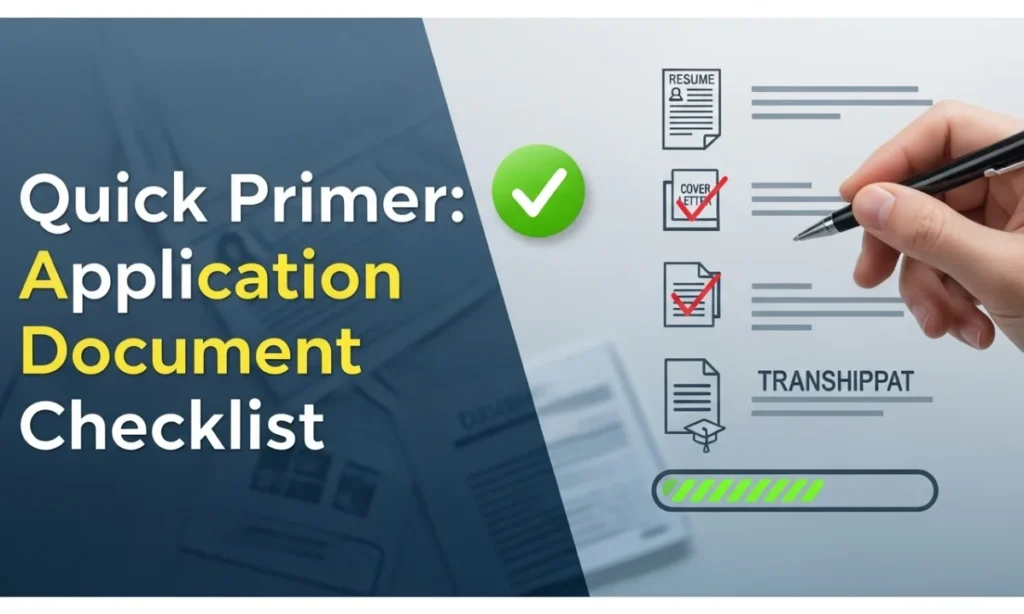
- Official transcripts (all institutions)
- CV/resume with research details
- SOP tailored to each program
- 2–3 strong LORs from research mentors
- GRE score (if required/recommended)
- English proficiency scores (if applicable)
- Supplementary materials (publications, code repositories, thesis)
Wrapping it up
A Data Science PhD program is competitive, but manageable if you reasonable thought to your planning. Develop a solid quantitative foundation, get relevant experiences in research, try to obtain strong letters of recommendation, and develop your SOP which reflects your fit with a faculty member’s research agenda. Start early! target programs that have research that align, and focus on concrete output that demonstrate your capacity to do independent research. Over time, you will develop persistently a strong image of yourself to be a candidate for admission.
Which part of the application would you like help with next: drafting a focused SOP, identifying faculty matches, or preparing for possible interview questions? Share your priority and I’ll give you a tailored checklist and next steps.